
The building sector in New Zealand is entering a major shift. With proportionate liability, mandatory home warranties and compulsory professional indemnity insurance on the way, everyone involved in design and construction will need tighter processes.
As an architectural office working daily with building consents, these changes do not come as a surprise. We have carried comprehensive professional indemnity insurance for years because risk management is part of good design practice.
Below is what the reforms mean, how they connect to the building consent process, and how good documentation helps homeowners move through council review with fewer surprises.
What proportionate liability is and why it matters now
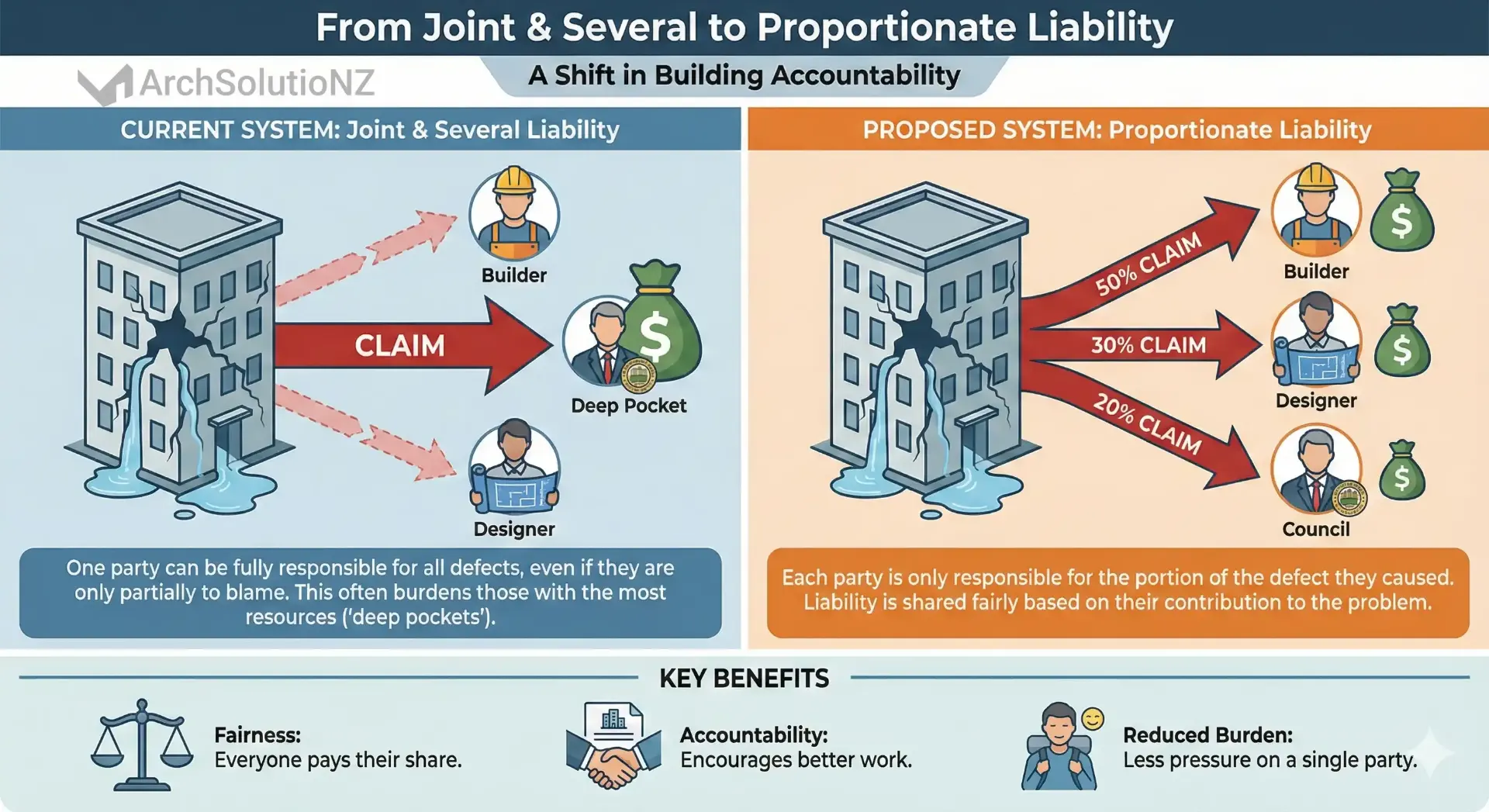
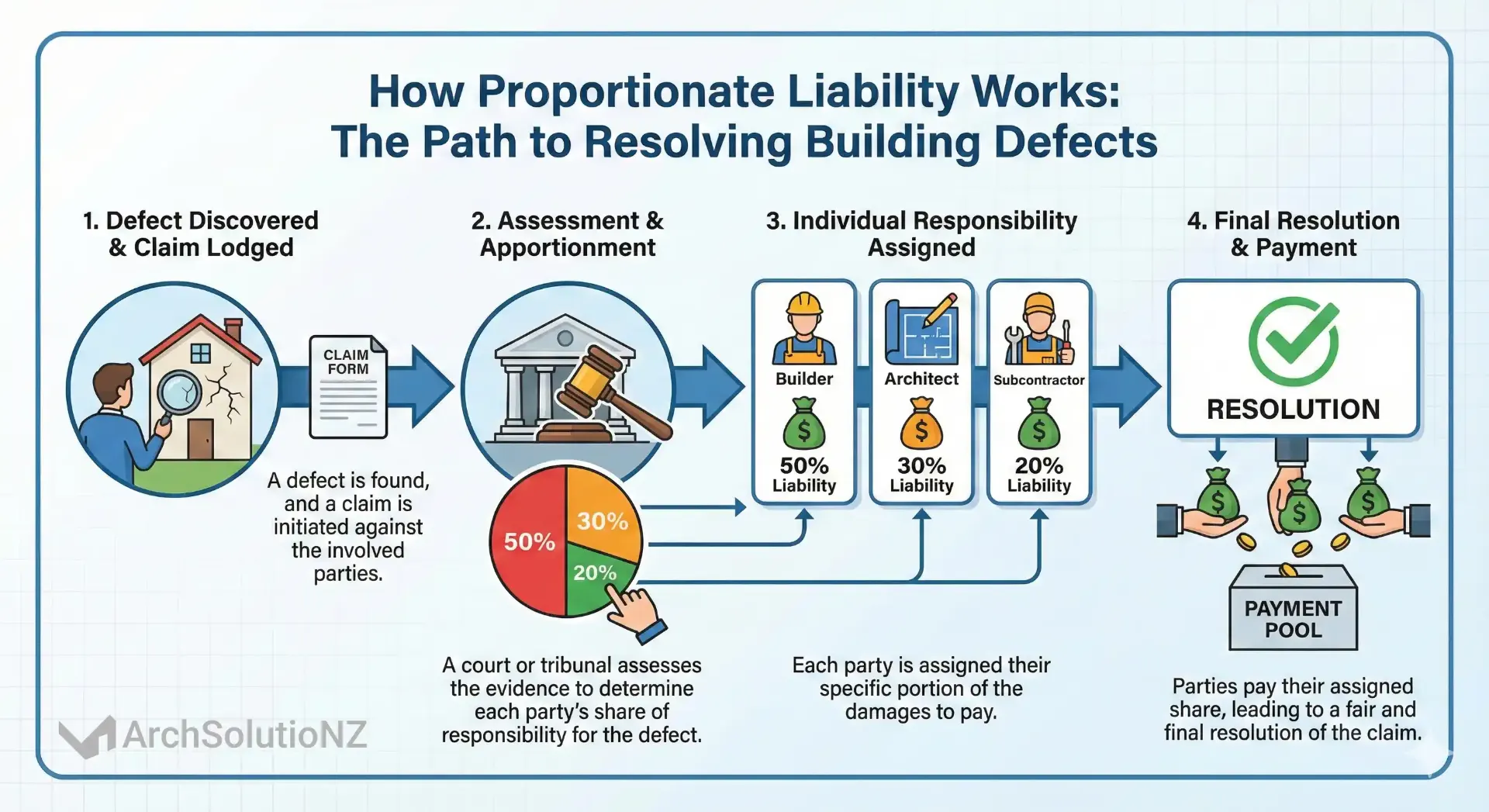
Proportionate liability means each party is responsible only for the share of fault they contributed to a defect. This is a significant shift away from the joint-and-several model, where one party, often a local council, could end up carrying the full cost even if others were also at fault.
According to the Ministry of Business, Innovation and Employment, the updated regime is intended to protect consumers more fairly and align cost allocation with actual responsibility.
For homeowners, this means clearer accountability.
For professionals, it means documentation, coordination and risk management must be solid, because each party's responsibility can be defined more precisely.
In our experience, every RFI is feedback. Over time, those lessons make documentation more robust, clearer and easier for council officers to assess.
How mandatory home warranties protect homeowners
The Government's home warranty scheme is expected to strengthen two practical protections for homeowners: a 12-month defects period and a 10-year structural warranty for major building elements.
12-month defects period
Builders must return and rectify defects that fall within the relevant protection period.
10-year structural warranty
The focus is major elements such as foundations, framing, waterproofing and weathertightness systems.
Building.govt.nz explains that implied warranties already apply for up to 10 years, but the new scheme formalises and strengthens the framework so consumer protection is more consistent across the sector.
View Building.govt.nz guidanceWho needs a warranty?
Under the reforms, the warranty pathway is expected to apply to:
- New homes
- Major renovations over $100,000 involving restricted building work
- Projects where structural, weathertightness or restricted building work risk needs clear consumer protection
For owners navigating building consent, this adds another layer of reassurance. It also means warranties may become part of the documentation package that needs to be understood before work starts.
Planning a renovation over $100k?
We can help you understand how warranty requirements, restricted building work and consent documentation fit together before you commit to the next step.
Start Your ProjectWhy PI insurance matters for architects and clients
Professional indemnity insurance is being made mandatory for design professionals as part of the reform direction. The purpose is to improve consumer confidence and reduce situations where homeowners are left carrying repair costs.
For ArchSolutioNZ, this is not new. Our work has been covered by professional indemnity insurance because design responsibility is an essential part of the service, not an optional extra.
What PI insurance can cover
- Errors or omissions in design documentation
- Losses caused by professional advice
- Defence costs
- Claims made years after project completion
Why this helps homeowners
It helps ensure designers have the financial capacity to respond if something goes wrong. Combined with proportionate liability, it creates a more balanced and transparent system.
What this means for building consents
These reforms are not just legal background. They can change what gets checked, what gets recorded and how risk is understood during a consent application.
1More confidence in documentation
Proportionate liability means documents need to be clear, coordinated and capable of showing who was responsible for each part of the work.
2Warranty evidence may become part of the file
Councils may ask for warranty evidence or confirmation that appropriate consumer protections are in place.
3PI insurance may need to be shown
Design professionals should be ready to provide proof of insurance as the new rules settle into practice.
4More coordination among LBPs
Expect closer checking of roles, responsibilities, certificates of work and qualification details.
5Clear paper trails reduce risk
The stronger the records, the easier it is to understand responsibility if something goes wrong later.
How we already manage risk
Long before these reforms, we built our workflow around accountability. We take responsibility for each stage of the building consent process, from early design and coordination through to final documentation.
The goal is simple: make your consent drawings as clear and council-ready as possible. These reforms only reinforce the importance of that commitment.
- Coordinated drawing sets that minimise conflicts
- Clear specifications aligned with the New Zealand Building Code
- RFI-ready documentation that anticipates common council questions
- Internal checklists aligned with implied warranty expectations
- Professional indemnity insurance carried as part of normal practice
Want council-ready documentation?
Our submissions are built to support efficient consent review, clear responsibility and better records under the changing reform environment.
Get Expert GuidancePeople also ask
When will proportionate liability start?
MBIE has confirmed the new rules are part of consumer protection reforms announced in late 2025. Timing depends on final legislation and implementation.
Does every homeowner need a warranty?
New homes and major renovations over $100,000 that involve restricted building work are expected to require a warranty.
What does the 10-year warranty cover?
The 10-year protection is intended to cover major structural elements such as foundations, framing, waterproofing and weathertightness systems.
Do architects need PI insurance now?
The reform direction makes professional indemnity insurance mandatory for design professionals. ArchSolutioNZ has carried PI insurance long before the requirement.
How will this change building consent timelines?
Expect more thorough checks and better documented submissions, but well-prepared applications should still move efficiently.
Conclusion
Proportionate liability, home warranties and mandatory PI insurance are designed to give homeowners clearer protection and to make every party in the construction process more accountable.
For us, these reforms formalise standards we already work to: insured professional service, lessons learned from every RFI, and documentation that councils can understand and assess.
If you are planning a build or renovation, the right documentation from day one will matter even more under the new framework.
Author
Alejandro Hidalgo Uzqueda
Founder, Director and NZ Registered Architect. NZRAB Registration No. 6195.
Discuss My Consent